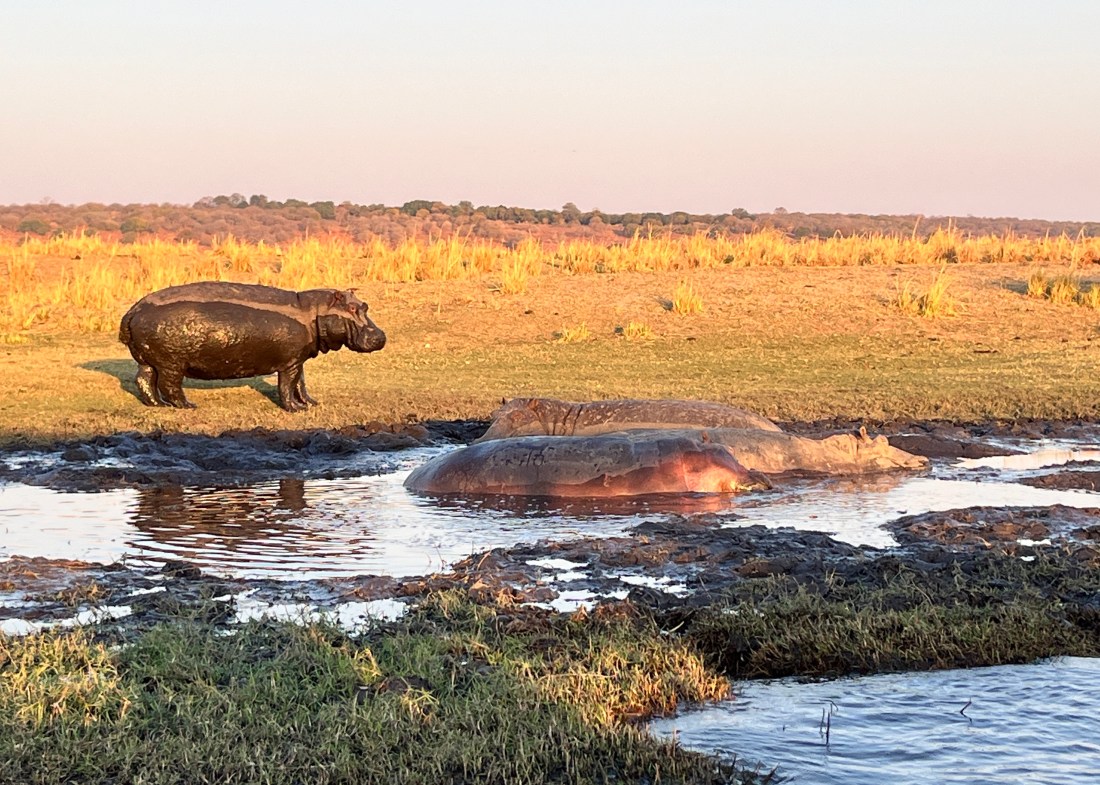
Hippos make a sound like a sinister fat man laughing, low and slow – heh, heh, heh, heh. They carry on throughout the night, and you can hear their loud, low laughter every few minutes amidst the equally un-peaceful sounds of tromping, splashing, and munching. Grunt, snort, sploosh, splosh, heh, heh, heh.
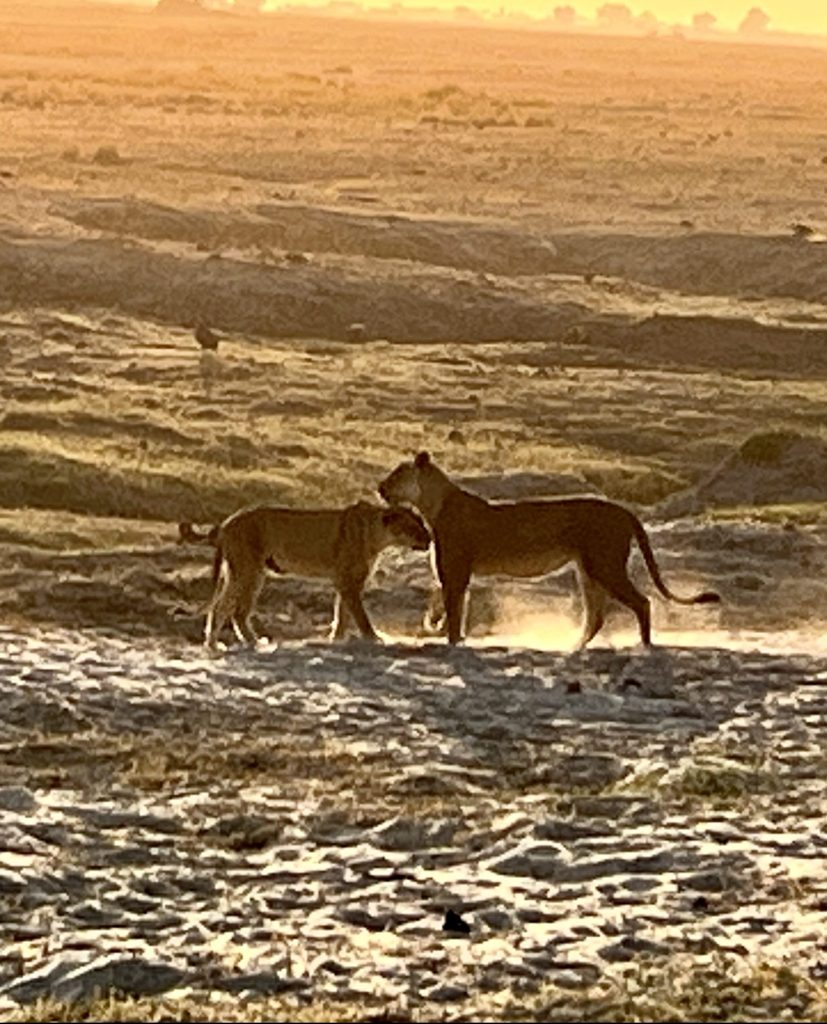
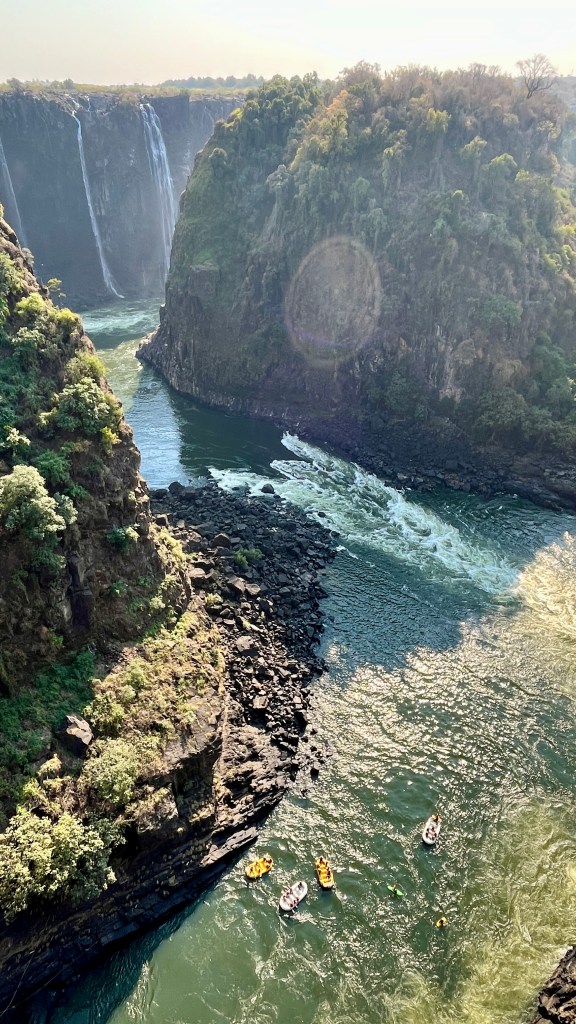
Last month, my family and I took a once-in-a-lifetime trip to southern Africa, where we watched penguins waddle across the beach in Cape Town, held our breath as a mother lion led her cubs past our very open air jeep in Chobi National Park, and clung to the sides of an inflatable raft as we plunged through multiple Class V rapids on the Zambezi River. In short, it was a memorable vacation!

Among our many awe-inspiring experiences was a two-day trip into the Okavango Delta of northwestern Botswana, where we traveled by mokoro canoe and slept in two-man tents on the ground, with hippos, elephants, and other wildlife rustling and chattering throughout the night. Our guides assured us that we’d be safe inside the tents, but it goes without saying that we slept very little overnight.
The Cubango River begins its journey in Angola, where it gathers rain throughout the month of January. Over the next six months, the river flows south at an extremely leisurely pace, changes names at the border of Botswana to become the Okavango, and eventually peters out in the middle of the Kalahari desert. Unlike most rivers that eventually flow to an ocean, the Cubango/Okavango ends its 1000-mile journey in a wide freshwater delta where it offers sanctuary to 1068 species of plants, 480 species of birds, and 130 species of mammals, including lions, leopards, African buffalos, elephants and rhinoceros. About 40% of the delta is protected within the Moremi Game Reserve, and the remainder is divided into wildlife management areas and controlled hunting areas managed by community trusts and private tourism concession-holders. The entire region is designated as a UNESCO World Heritage Site.
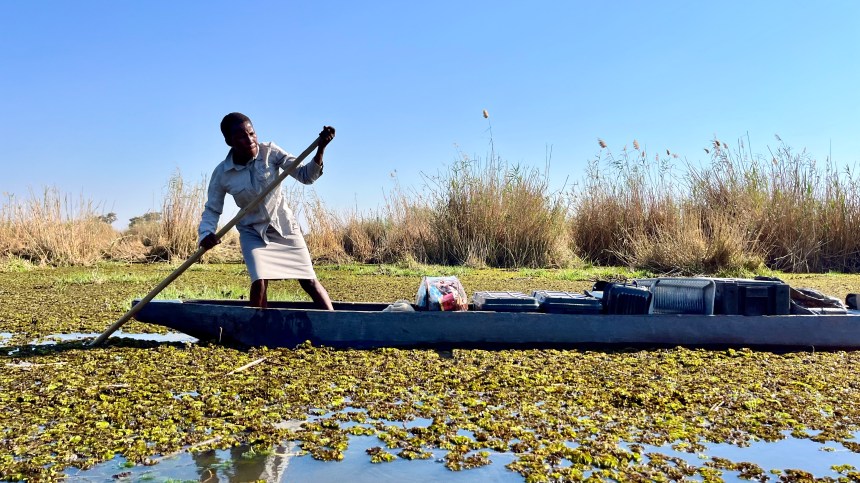
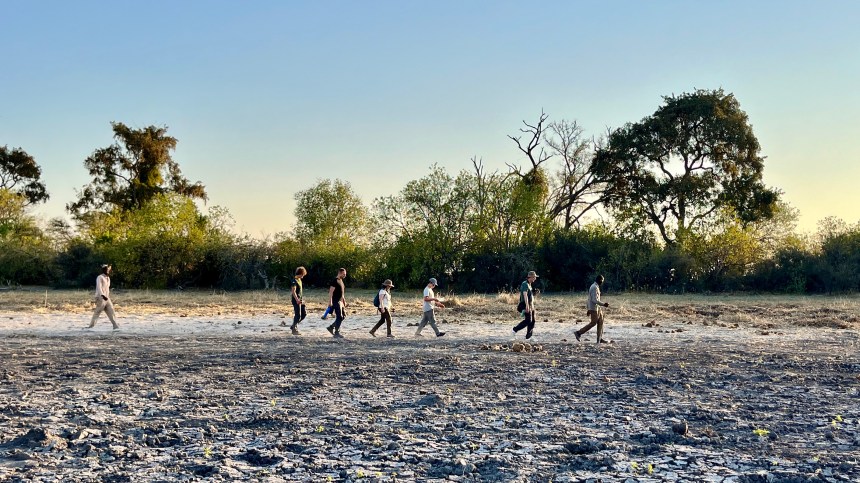
We visited the Okavango Delta as part of a small-group, multi-day tour led by G Adventures, which in turn, connected us with local guides called “polers,” who brought us into the delta, helped us to set up camp, and led us on bushwalks to see giraffes, elephants, buffalo, impala, kudu, and birds. Also, there were the hippos.
Though the Okavango Delta covers an impressively large area – 2300 square miles of permanent wetlands and more than 4600 square miles of seasonally flooded grasslands – the water is mostly shallow throughout the delta. To get around, the local Bayei people invented mokoro canoes, which were traditionally carved out of the trunks of large trees. To propel the mokoro forward, a poler stands in the back of the boat and uses a long wooden pole to dig into and push off of the mucky wetland bottom. Today, most mekoro are made of fiberglass, which is a more sustainable and eco-friendly alternative.


As a passenger in a mokoro, you sit low in the water, which makes for a peaceful journey as you glide through tall grasses and lilies…at least until you see hippos. Though hippos might appear friendly and adorable, they can weigh more than 3000 pounds, and are able to run as fast as 19 miles per hour. The males are extremely territorial (so much so that mother hippos have to hide their male babies to protect their lives) and are considered among the most dangerous animals in the world due to their aggressive and unpredictable nature. We passed numerous hippos while poling into and out of the delta and always made a wide path around them to avoid any confrontation.
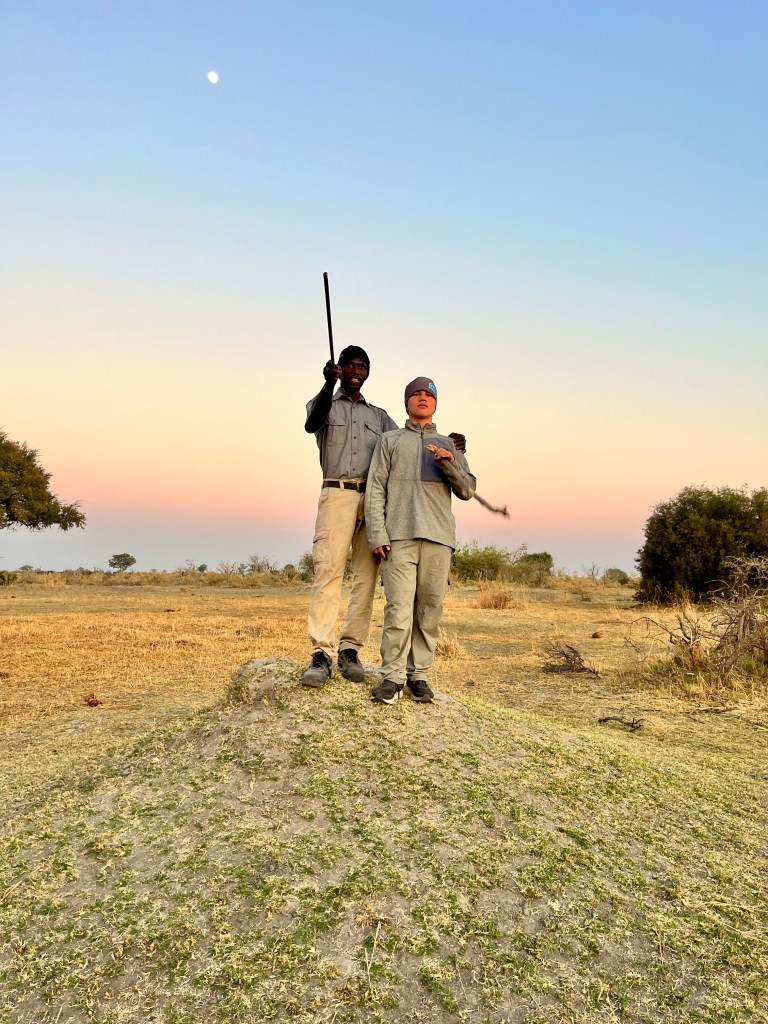
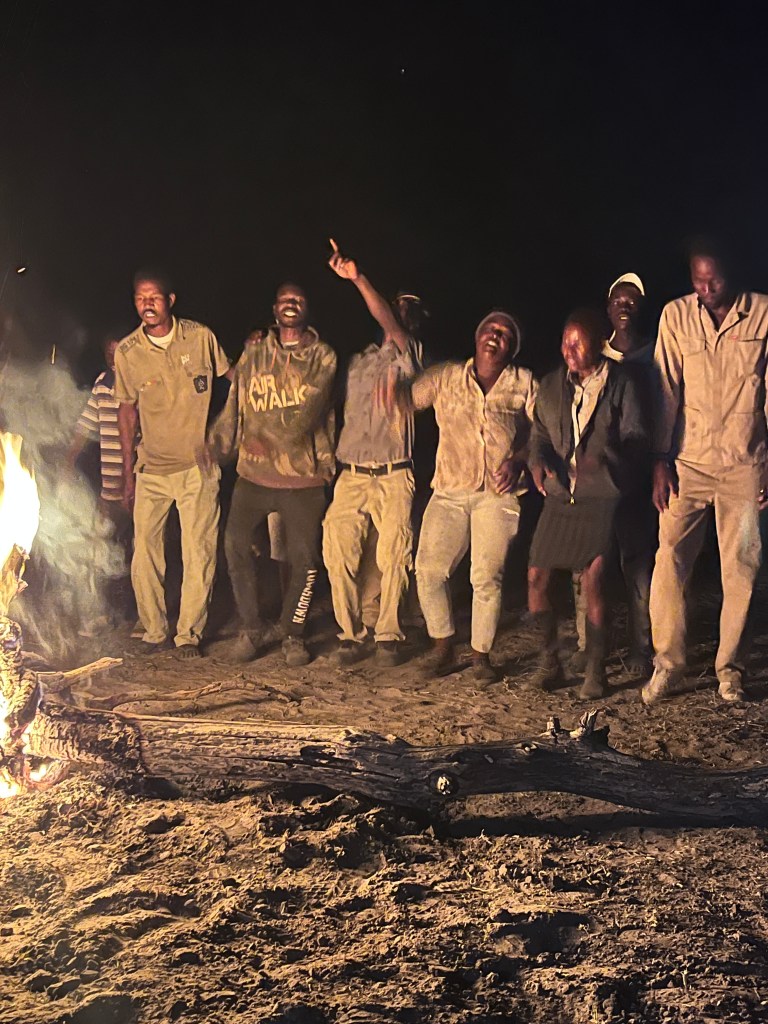
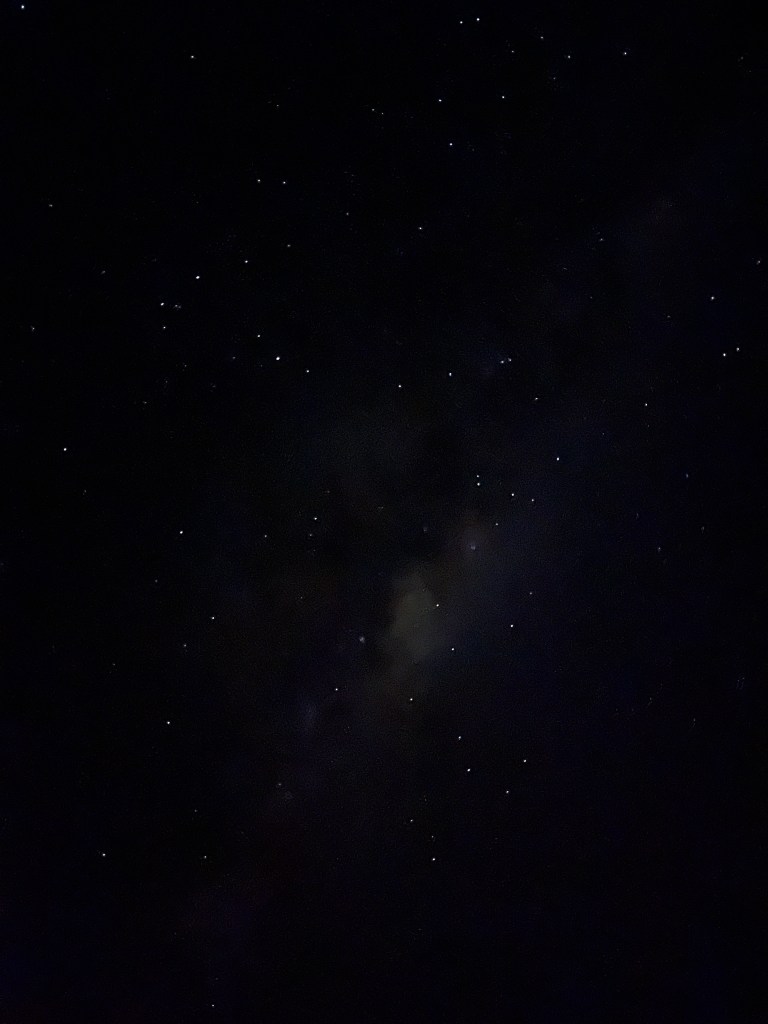
In some ways, the Okavango Delta reminded me of the Boundary Waters Wilderness in northern Minnesota. Unlike some of the more popular destinations we visited in Africa, the Okavango offers a quieter and more intimate nature experience. After setting up tents in a cluster along the water’s edge, our small group of 18 people spent the day napping, reading books, and playing a made-up game that was sort of like marbles but with large, round nuts we found lying under the trees. When we hiked at sunset and sunrise, we saw plenty of animals, but mostly from a distance instead of up close. (A very good thing when traveling on foot!) And, much like in the BWCA, the stars and Milky Way were on full display in a blissfully dark sky when we sat around the campfire at night singing songs and telling stories.

On the other side of the world, we climbed into our tents near the water’s edge after a long day of canoeing. It was just like Minnesota until we heard the hippos laughing. Grunt, snort, sploosh, splosh, heh, heh, heh. I closed my eyes and firmly decided to hold my pee until morning.

 East Metro Water